


How each one works
An evaporative cooler pulls outside air through wet pads. The water evaporates and cools the air, which is pushed through the house. You leave windows or doors partly open so the air can escape.
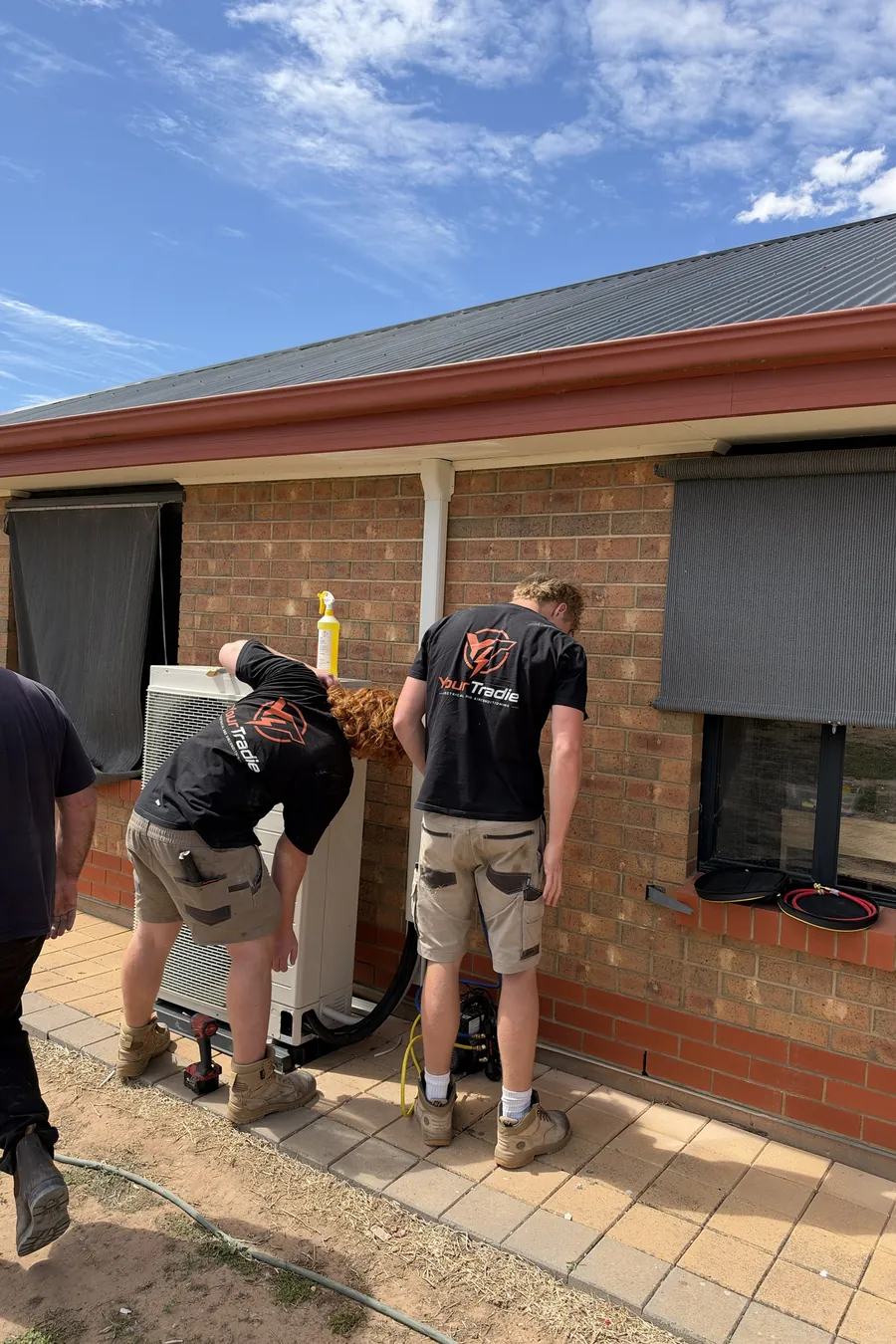
Reverse cycle (a split system or ducted) works like a fridge in reverse. It moves heat out of the house in summer and into it in winter, with the doors and windows closed.
Where evaporative does well
Evaporative cooling suits Adelaide's dry heat:
- It's cheap to run on dry days
- It brings in fresh air instead of recirculating it
- A well-maintained unit can last a long time
Where reverse cycle does better
Reverse cycle wins when:
- It's humid. Evap struggles when the air is already moist, which is when you feel the heat most
- You want heating as well. An evap does nothing for you in winter
- You want to cool with the house closed up, for security, dust or smoke
- You only want to cool some rooms. A split system cools the room you're in
Service the evap or replace it?
If your evap is working but blowing warm or smelling musty, a service usually fixes it: new or cleaned pads, the pump and float valve checked, the tank cleaned. It's worth doing every spring.
If the unit is rusting through, leaking into the roof, or you're sick of it not coping on humid days, it's worth pricing reverse cycle. That could be one or two split systems for the rooms you use most, or ducted for the whole house.
I'll give you a fixed price for both, the evap service and the replacement, so you can compare properly.